

Forex trading is often marketed as a fast path to financial freedom. In reality, it is a high-skill profession that rewards discipline, patience, and structured decision-making. The global currency market moves trillions of dollars every day, creating opportunities for those who understand how to operate within it—and losses for those who don’t.
One of the first—and most underestimated—decisions a trader makes is selecting the right broker environment. Platforms like the Pocket Option broker platform are designed for fast execution and simplified trading access, but the real edge comes from how a trader uses these tools, not just having access to them.
In this guide, we go beyond basics. We’ll explore how Forex works, how professional traders think, what strategies actually survive long-term, and how to build a system that produces consistent results.
Understanding Forex: The Core Mechanics
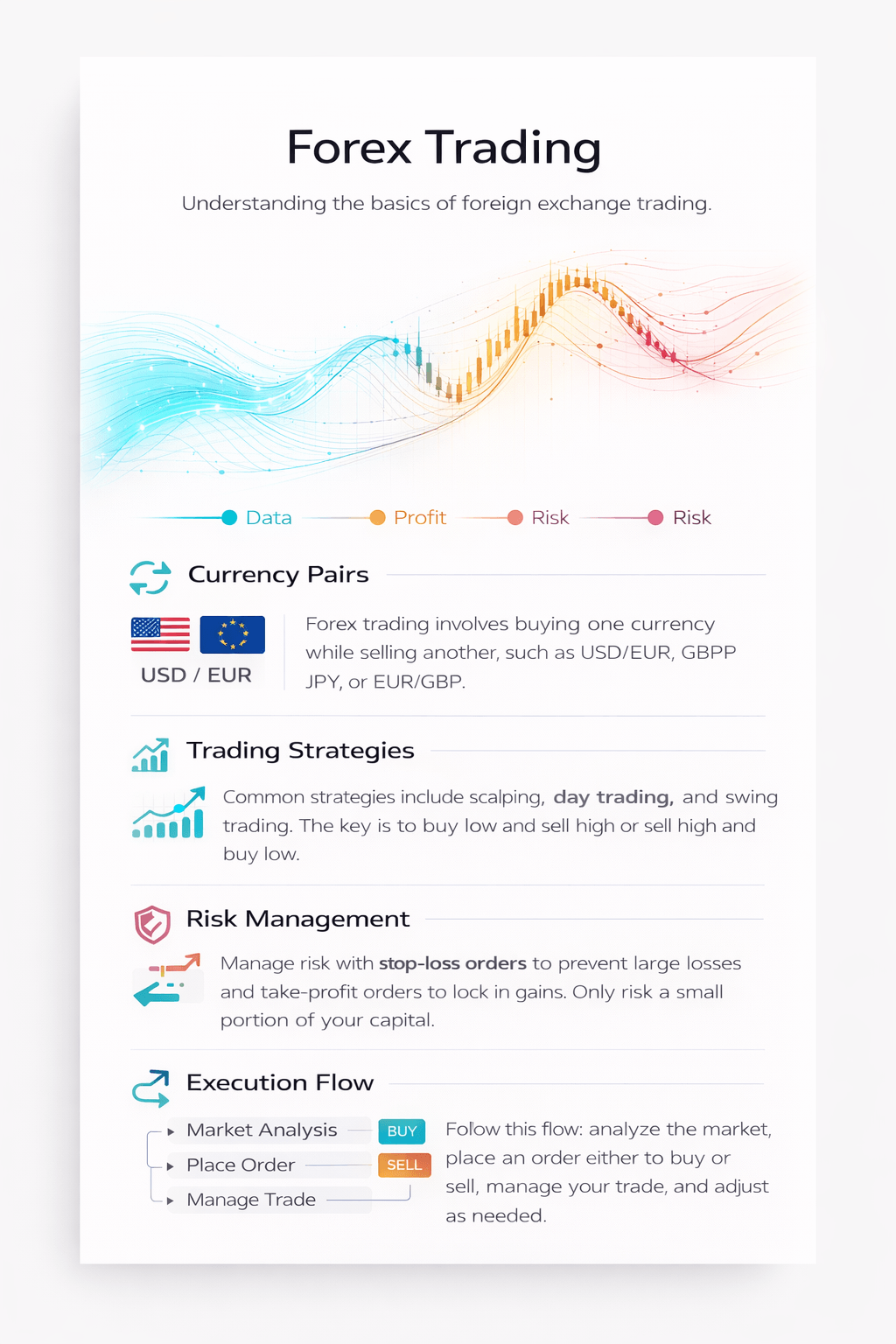
Forex (foreign exchange) trading is the exchange of one currency for another, with the goal of profiting from changes in exchange rates.
Currency Pair Structure
- Base currency — the first currency (EUR in EUR/USD)
- Quote currency — the second currency (USD in EUR/USD)
If EUR/USD is at 1.1000, it means 1 euro equals 1.10 US dollars.
Major Forex Pairs and Their Behavior
| Pair | Characteristics | Volatility |
|---|---|---|
| EUR/USD | Stable, highly liquid | Medium |
| GBP/USD | Fast-moving | High |
| USD/JPY | Driven by interest rates | Medium |
| AUD/USD | Commodity-linked | Medium |
Each pair has its own “personality,” and experienced traders specialize rather than trade everything.
Market Structure: Who Moves the Market?
Retail traders often believe they move prices—but in reality, Forex is dominated by institutional players.
- Central banks (interest rates, monetary policy)
- Hedge funds (large speculative positions)
- Commercial banks (liquidity providers)
- Corporations (currency conversion)
Understanding this hierarchy is key: retail traders react to moves, institutions create them.
Trading Sessions and Timing
Forex operates 24 hours a day, but not all hours are equal.
| Session | Best For | Volatility |
|---|---|---|
| Asian | Range trading | Low |
| London | Breakouts | High |
| New York | Trend continuation | High |
Professional traders don’t trade all day—they trade specific sessions.
Technical Analysis: Reading the Market
Technical analysis focuses on price action rather than external news.
Core Tools
- Support and resistance
- Trendlines
- Moving averages
- Candlestick patterns
Price reflects everything—news, sentiment, and positioning.
Fundamental Analysis: Understanding the Bigger Picture
Fundamentals explain why markets move.
Key Drivers
- Interest rate decisions
- Inflation data (CPI)
- Employment reports
- GDP growth
For example, higher interest rates usually strengthen a currency.
Forex Trading Strategies That Actually Work
1. Trend Trading
Follow the direction of the market.
- Higher highs = uptrend
- Lower lows = downtrend
2. Breakout Trading
Enter when price breaks key levels.
- Strong volatility
- High reward potential
3. Mean Reversion
Markets tend to return to average levels.
- Works in ranging markets
4. News Trading
Trade around major economic releases.
- High risk
- High volatility
| Strategy | Market Condition | Difficulty |
|---|---|---|
| Trend | Trending | Medium |
| Breakout | Volatile | High |
| Mean Reversion | Range | Low |
Risk Management: The Only Real Edge
If there is one concept that separates professionals from amateurs, it’s risk management.
Core Principles
- Risk 1–2% per trade
- Use stop-loss on every trade
- Never average down blindly
Even a 60% win rate can fail without proper risk control.
Position Sizing Example
| Account Size | Risk % | Risk Amount |
|---|---|---|
| $1,000 | 1% | $10 |
| $5,000 | 2% | $100 |
| $10,000 | 1% | $100 |
Consistency matters more than big wins.
The Role of Trading Platforms
Execution is where theory meets reality.
What a Good Platform Provides
- Fast execution
- Low spreads
- Stable performance
- Clear interface
In fast-moving markets, delays of even a few seconds can impact results.
Psychology: The Hidden Battlefield
Most traders lose not because of strategy—but because of emotions.
Common Psychological Traps
- FOMO (fear of missing out)
- Revenge trading
- Overconfidence after wins
- Fear after losses
Professional traders treat trading like a process, not a gamble.
Common Beginner Mistakes
- Overtrading
- Changing strategy constantly
- Ignoring risk
- Focusing only on profits
Avoiding mistakes is often more important than finding the “perfect strategy.”
Building a Professional Trading Plan
A trading plan transforms random decisions into structured actions.
Must-Have Elements
- Entry criteria
- Exit strategy
- Risk limits
- Trading journal
Without a plan, you are reacting—not trading.
Forex vs Other Markets
| Market | Liquidity | Accessibility | Volatility |
|---|---|---|---|
| Forex | Very high | High | Moderate |
| Crypto | High | Very high | Very high |
| Stocks | High | Medium | Variable |
The Reality of Profitability
Professional traders think differently:
- Focus on consistency, not big wins
- Accept losses as part of the process
- Measure performance over months, not days
This mindset is what creates long-term results.
Final Thoughts: Trading as a Skill, Not a Shortcut
Forex trading is not about predicting the market perfectly—it’s about managing uncertainty better than others.
The most successful traders:
- Use structured strategies
- Control risk
- Stay disciplined
- Choose reliable trading environments
Because in the end, trading is not about finding the perfect entry.
It’s about surviving long enough to let your edge play out.
Frequently Asked Questions (FAQ)
What is Forex trading?
Forex trading is the process of buying and selling currencies to profit from changes in exchange rates. It is the largest financial market in the world, operating 24 hours a day.
Is Forex trading profitable for beginners?
Forex trading can be profitable, but beginners often face losses due to lack of experience, poor risk management, and emotional decisions. Consistent profitability requires time, discipline, and a structured strategy.
How much money do I need to start Forex trading?
You can start with as little as $50–$100 on some platforms, but a more realistic starting capital for proper risk management is $500–$1,000 or more.
What is the best Forex trading strategy?
There is no single best strategy. Popular approaches include trend trading, breakout trading, and swing trading. The best strategy is the one that fits your personality and risk tolerance.
How important is risk management in Forex?
Risk management is the most important factor in trading success. Professional traders risk only 1–2% of their account per trade and always use stop-loss orders.
What should I look for in a Forex broker platform?
You should consider execution speed, spreads, reliability, available tools, and ease of use. A good platform helps you execute trades efficiently and manage risk effectively.
Can I trade Forex without experience?
Yes, but it is strongly recommended to start with a demo account, learn basic strategies, and practice risk management before trading with real money.
What are the biggest mistakes in Forex trading?
Common mistakes include overtrading, ignoring risk management, chasing losses, and switching strategies too often without proper testing.
